 Proudly Canadian-Owned
Understanding CPU and GPU: The Heart of Computing
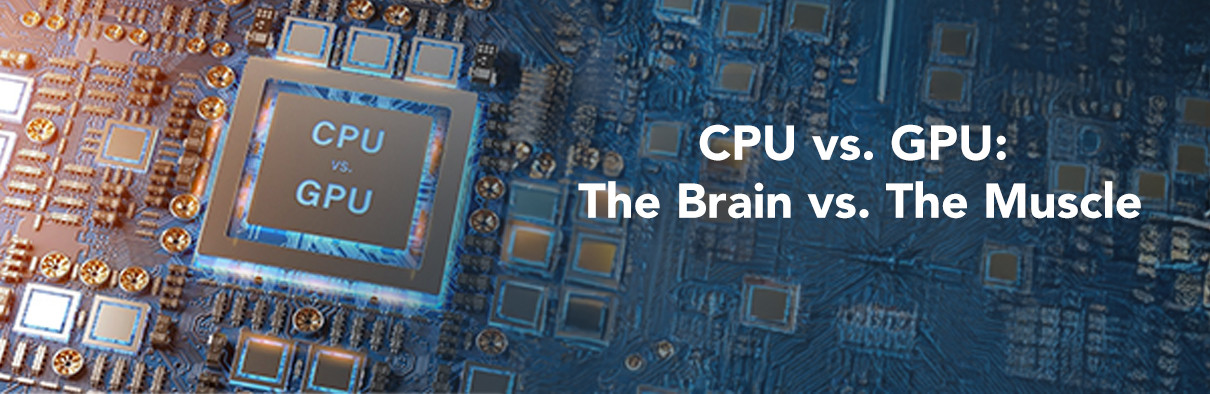
In the world of modern computing, two critical components drive the processing power of a device: the Central Processing Unit (CPU) and the Graphics Processing Unit (GPU). While these terms are often used interchangeably in discussions about performance, they serve distinct roles within a computer system. To better understand their function, let's dive into the specifics of each, comparing their capabilities, functions, and how they work together to power everything from everyday computing tasks to complex gaming and artificial intelligence (AI) operations.
What is a CPU?
The Central Processing Unit (CPU) is the primary unit within a computer responsible for executing instructions from programs. Often referred to as the "brain" of the computer, the CPU handles general-purpose processing tasks such as arithmetic, logic, control, and input/output operations. It interprets and executes instructions from the operating system and software, making it an essential component for running applications and performing basic tasks.
Key Characteristics of CPUs:
- Core Count: Modern CPUs typically have multiple cores, which enable them to handle multiple tasks (or threads) simultaneously. A quad-core CPU can run four tasks at once, and higher-end models may feature six, eight, or more cores.
- Clock Speed: Measured in gigahertz (GHz), this refers to the number of cycles a CPU can execute per second. Higher clock speeds generally result in faster processing, though other factors, like architecture and core count, also play a role in performance.
- Instruction Set Architecture (ISA): CPUs follow a specific ISA, like x86 or ARM, which defines the types of operations and instructions that the CPU can execute.
- General-purpose nature: CPUs are versatile and capable of performing a wide variety of tasks, from running operating systems to complex algorithms.
CPU Use Cases:
- Everyday computing: Tasks such as web browsing, word processing, email management, and basic multimedia consumption are all handled by the CPU.
- Software development: Compiling code, running complex simulations, and running development environments depend heavily on CPU performance.
- Server applications: In data centers, CPUs power cloud services, web hosting, and database management.
What is a GPU?
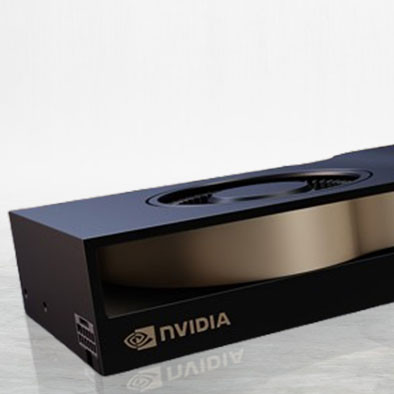
The Graphics Processing Unit (GPU), also known as the video card or graphics card, is a specialized processor primarily designed to accelerate the rendering of images and video. Originally developed for handling complex graphics in video games, GPUs are now utilized in a wide array of computationally intensive tasks beyond gaming, such as AI, machine learning, and scientific computing.
Key Characteristics of GPUs:
- Parallel Processing: Unlike CPUs, which are designed for sequential task execution, GPUs excel at parallel processing. They contain hundreds or even thousands of smaller cores that can execute multiple operations simultaneously, making them ideal for tasks that can be divided into many smaller parts, like image rendering.
- Floating Point Operations: GPUs are designed to handle floating-point operations (which involve real numbers) very efficiently. This is particularly important in graphics rendering, AI, and scientific simulations.
- Memory Architecture: GPUs typically come with their own dedicated memory (VRAM) optimized for handling high-bandwidth data required for graphics and parallel tasks.
- Specialization in graphics: While modern GPUs are capable of a range of tasks, their primary role is to process the visual output of the system, making them essential for rendering complex 3D graphics and video.
GPU Use Cases:
- Gaming: The GPU handles the heavy lifting of 3D rendering, shading, and real-time graphics processing required in video games, enabling smooth and immersive experiences.
- AI and Machine Learning: With their ability to handle thousands of simultaneous calculations, GPUs have become invaluable in training machine learning models, especially for deep learning and neural networks.
- Video Editing and Content Creation: High-performance GPUs are essential for rendering and processing high-definition video, special effects, and 3D modeling in software such as Adobe Premiere, Blender, and Autodesk Maya.
- Scientific Computing: GPUs accelerate tasks such as molecular simulations, financial modeling, and data analysis by enabling fast parallel processing.
How CPU and GPU Work Together
Though the CPU and GPU serve different functions, they are complementary components within a computing system. While the CPU manages the general operations of the system and handles single-threaded tasks, the GPU is designed to offload computationally intensive tasks, particularly those that require parallel processing, such as rendering complex graphics or training AI models.
In a typical gaming setup, the CPU handles the game's logic, physics, and AI, while the GPU focuses on rendering the game's visuals. Similarly, in AI applications, the CPU manages the overall flow of data and the high-level logic, while the GPU handles the intensive mathematical computations required for training and inference.
In many modern computing systems, including personal computers, workstations, and servers, CPUs and GPUs work in tandem to improve performance. GPU-accelerated computing has gained popularity, allowing for significant speedups in fields like machine learning, scientific research, and big data analysis.
The Future of CPU and GPU Technologies
As technology evolves, the lines between CPUs and GPUs are beginning to blur. We are witnessing the rise of heterogeneous computing, where a system contains multiple types of processors (e.g., CPUs, GPUs, and specialized accelerators like TPUs or FPGAs) that work together seamlessly to tackle a broad range of tasks.
Furthermore, innovations such as integrated GPUs (where GPU cores are embedded directly into the CPU die) are becoming more common in consumer devices, offering a balance between performance and power efficiency in laptops and desktops. Additionally, advancements in AI-driven hardware are reshaping the way processors are designed, with chips optimized for deep learning tasks becoming more widely used across industries.
Conclusion
In essence, the CPU is the all-purpose powerhouse that handles a broad array of tasks, ensuring that your computer runs smoothly. The GPU, on the other hand, is a specialized performer, designed for specific high-performance tasks like rendering images and running parallel computations. Together, these two components form the backbone of modern computing, each playing a unique and vital role in ensuring that your system can handle everything from everyday productivity to cutting-edge applications in gaming, AI, and beyond.